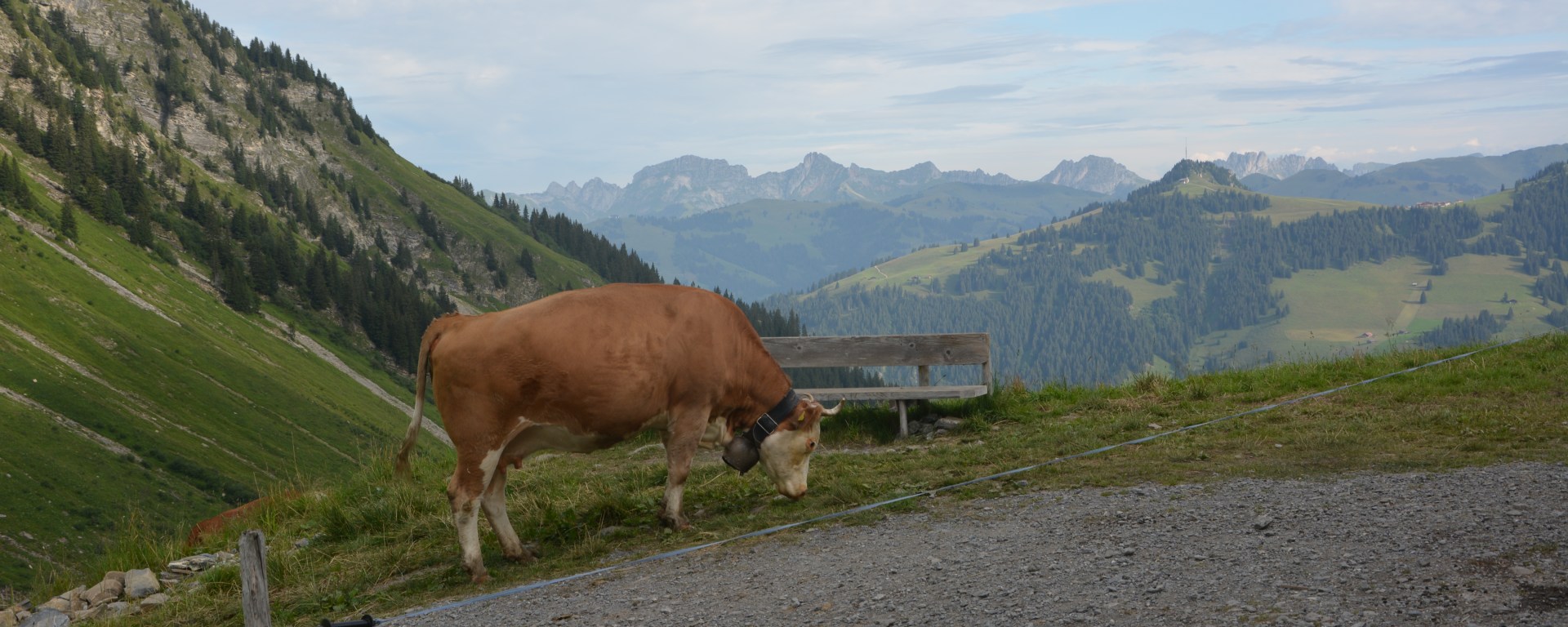
The essence and passion for the traditional craft of cheesemaking lives on in a remote Swiss mountain hut in Alp Turnels.
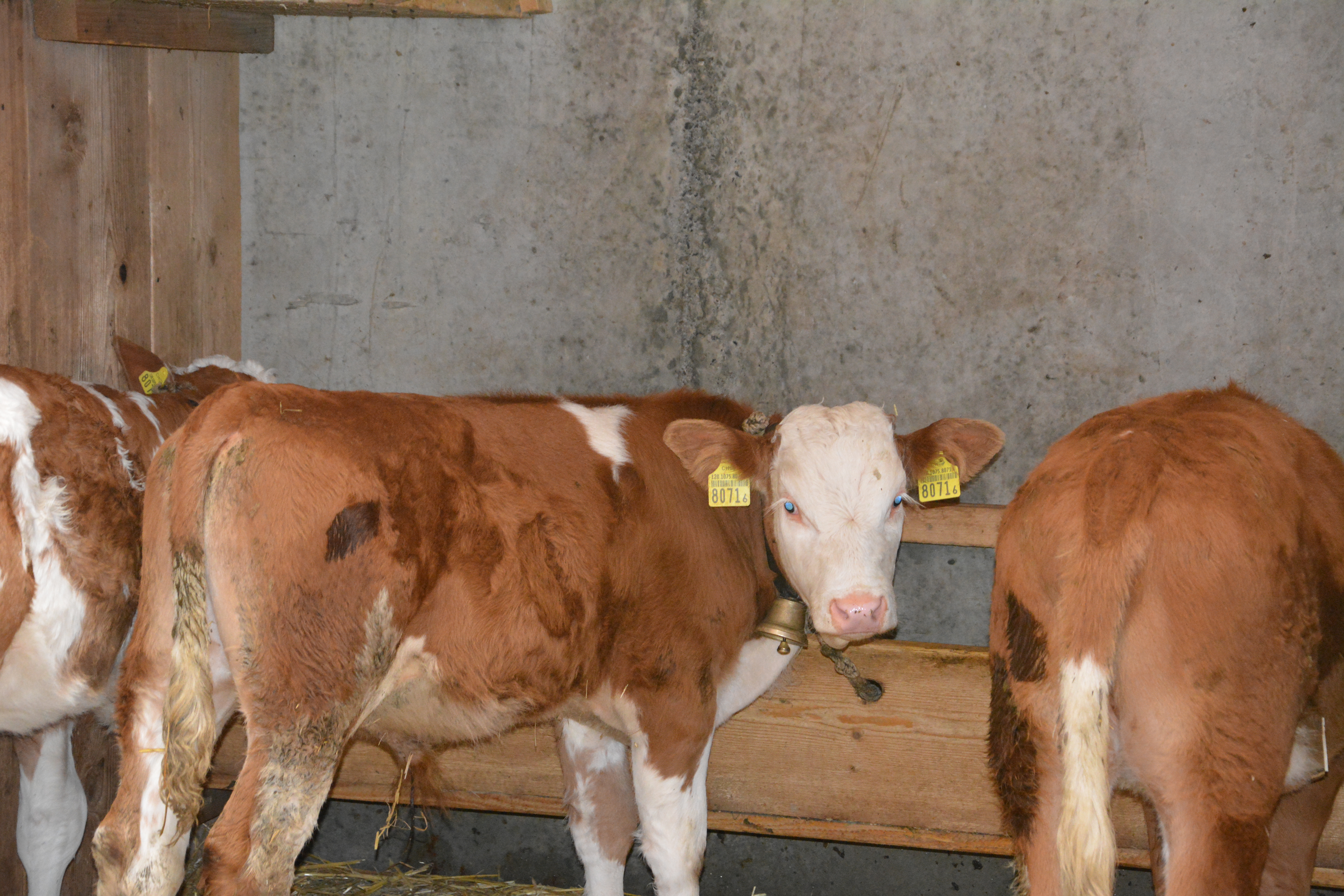
Glassy blue eyes stare into mine without so much as a blink. Large brown ears twitch just a little bit, drawing my attention to bold numbers—8071—marked on a yellow plastic ear tag. I step forward assuming friendliness, but the little brown Swiss calf shuffles away and shudders, making the bell around her neck tinkle. That’s when it strikes me that she’s probably staring at me because she’s wary and frightened of this stranger in her barn.
I’ve journeyed a long way to be here. Including halts, waits, and layovers I’ve been travelling non-stop for 26 hours—by air, train, and finally a 4WD—to get from Mumbai to Alp Turnels, a remote, one-house spot in the Swiss Alps, near the tourist town of Gstaad. It is a long way from home, but sometimes you’ve got to travel that distance to feed a few curiosities: Why do cheese farmers practise transhumance? Why is cheese so expensive? What does it take to make a 15-kilo wheel of Alpine cheese?
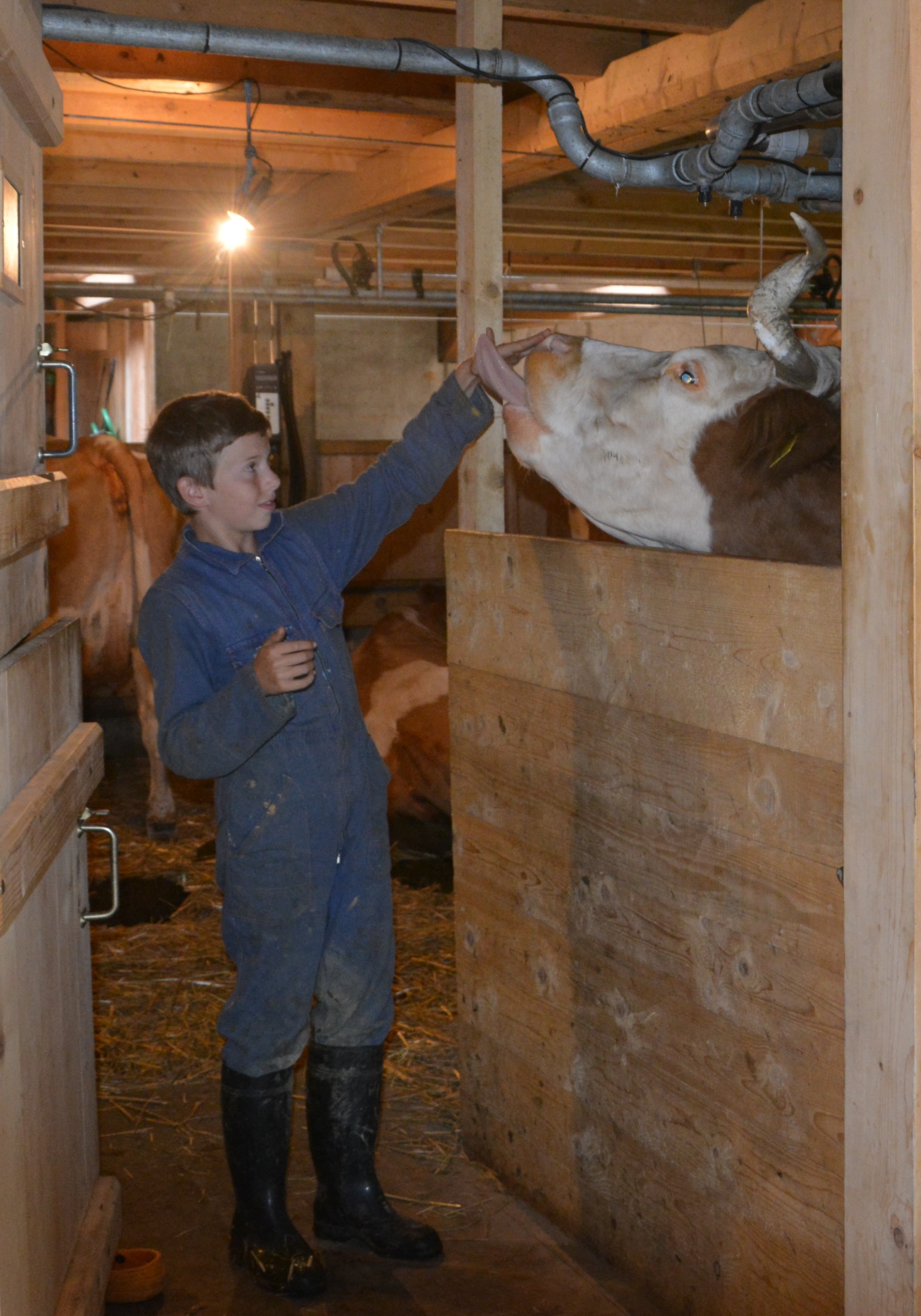
Backing off from the spooked yearling, I stumble a little in my oversized, knee-length gumboots. I return to the barn’s adult cow enclosure where cheese farmer Jakob Zumstein and his 11-year-old grand-nephew Leo are conducting the mechanised milking. The cows aren’t bothered by my presence and I watch as 150 litres of milk makes its way from cow to storage tank. Jakob has been making this cheese for 40 years. First with his father, and then on his own. In the tradition of his ancestors, whose framed photo sits on the kitchen wall, every summer Jakob and his wife Erika bring a herd of about 30 cows up the mountain from their farm near Gstaad to an altitude of 1,900 m, to live for two months on this Swiss cliffside.
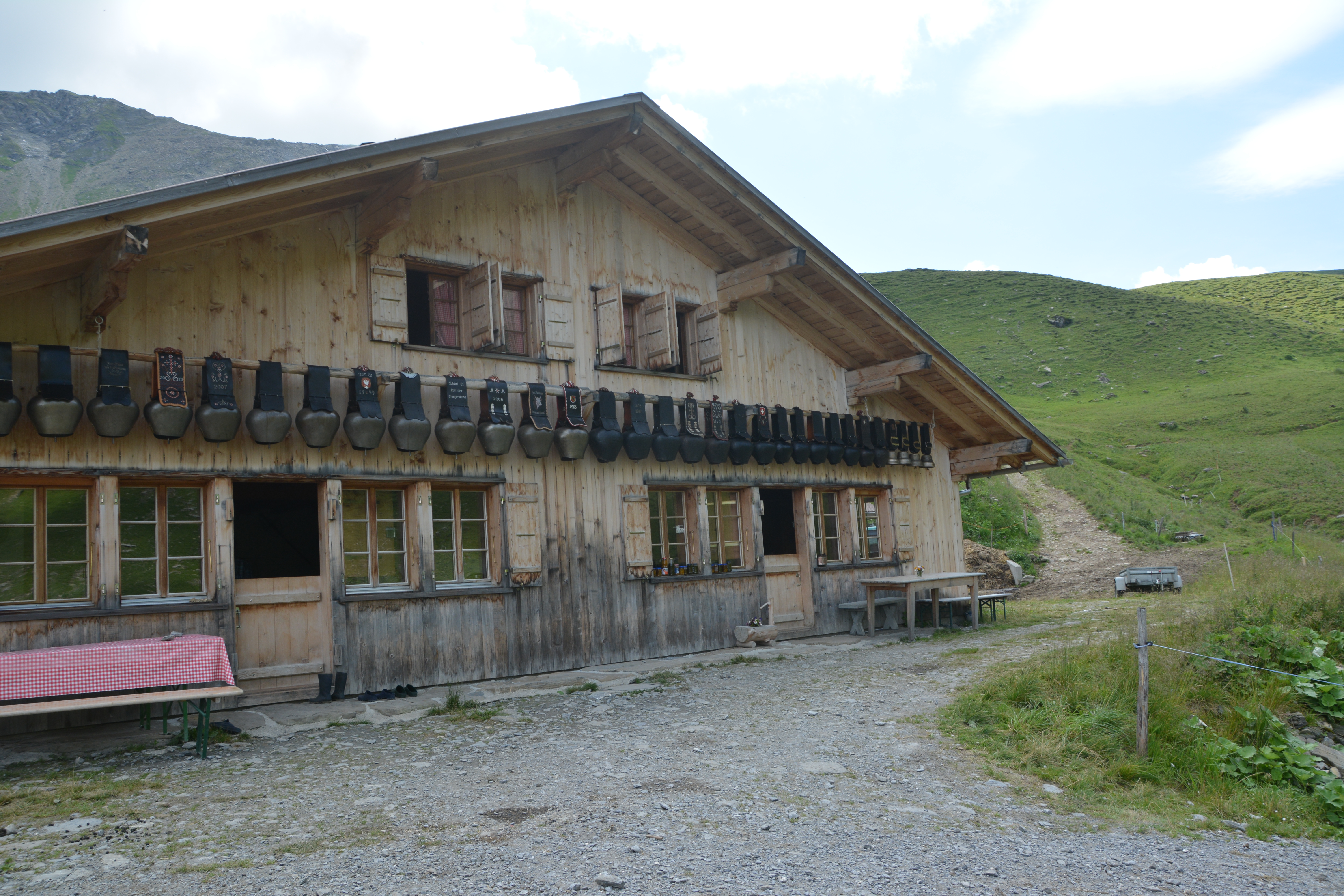
Their remote farmhouse in Alp Turnels is a large cabin, which they call a mountain hut, with an attached barn; one half of this property is owned and used by another cheese-farming couple. In the picture on the wall, Jakob’s forbears are posing at this very location, though the house in the picture looks different from the fresh, new structure we are in right now. The current house and barn were built in 2000. The original one, where his grandfather and father lived each summer, was washed away in an avalanche in 1999. During the two months they are here, starting in July and ending in August, the Zumsteins make about 2,000 kilos of Alpkäse, a hard Alpine cheese. They also welcome visitors to stay and observe their operation and spend the night in a hayloft above the barn.
At dawn, sleep flies out my eyes when I hear the sound of cowbells in the distance. Like the chirping of birds, it is soothing even though it isn’t melodic—a lovely sound bouncing off the mountains. I stir in my warm bed in the hayloft. Throwing off the red-and-white chequered comforter, I pull on a jacket and hurry downstairs. There are cows on the cliffsides all around, roaming and ruminating, chowing down on dew-filled Alpine grasses and wild flowers. Sunlight glints off some of the cowbells hanging from their necks. Jakob, with tousled white hair and black suspenders holding up his pants, is standing with a pair of binoculars peering further up the mountain. He calls me over and hands me the lenses, pointing excitedly to a rocky ridge where, with naked eye, I can just about see some brown spots. The binoculars reveal the horns and brown bodies of the wild Alpine ibex. This is an extremely rare sighting, I’m assured. Jakob then turns his binoculars downhill and he and Erika discuss in Swiss German what their son is doing right now at their farm lower down the mountain. I chat with them and waste no time in asking Jakob what I’ve been dying to know: Why does he bother with relocating all the way up here for two months of the year just to make cheese, especially when he’s got an environment lower down that’s already so clean? Jakob’s gentle smile shines through a pair of kind eyes. He’s very clear: If you want high-quality cheese, you need high-quality milk. And if you want high-quality milk you’ve got to have happy cows who feed on the best Alpine grasses. The grass they eat up here in the mountains is unmatched. I watch the cows contentedly eat their way through the vivid green Alpine grasses, mixed with herbs, wild flowers and other healthy wild greens and it makes sense.
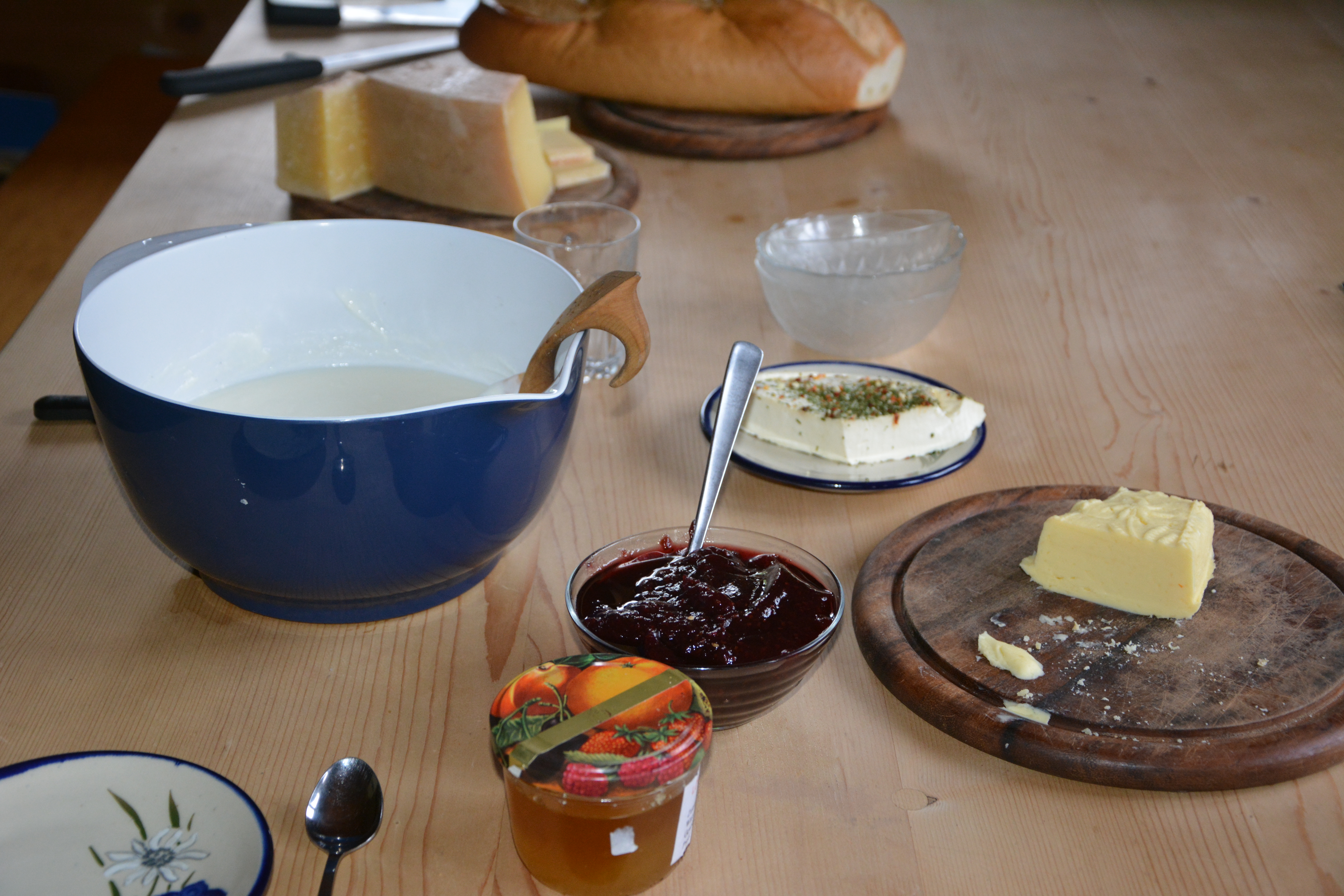
“Taste the cream,” Erika gestures to me once we’re back in the kitchen. Since we don’t really have a common language we use single words, sign language, and Jakob to communicate. Using a beautiful carved wooden spoon she ladles a small amount out from the cobalt blue bowl for me to taste. The texture is utterly smooth, and though unsweetened it appears so sweet to my palate—it’s fresh, clean, comforting. She sets it on the gorgeous pinewood table along with home-made butter, three cheeses, all different ages and made right here, of course. There are several preserves she’s made and two loaves of bread that they brought up from Gstaad the previous evening. It’s all so inviting, fresh and hearty—exuding the warmth of the countryside and my hosts.
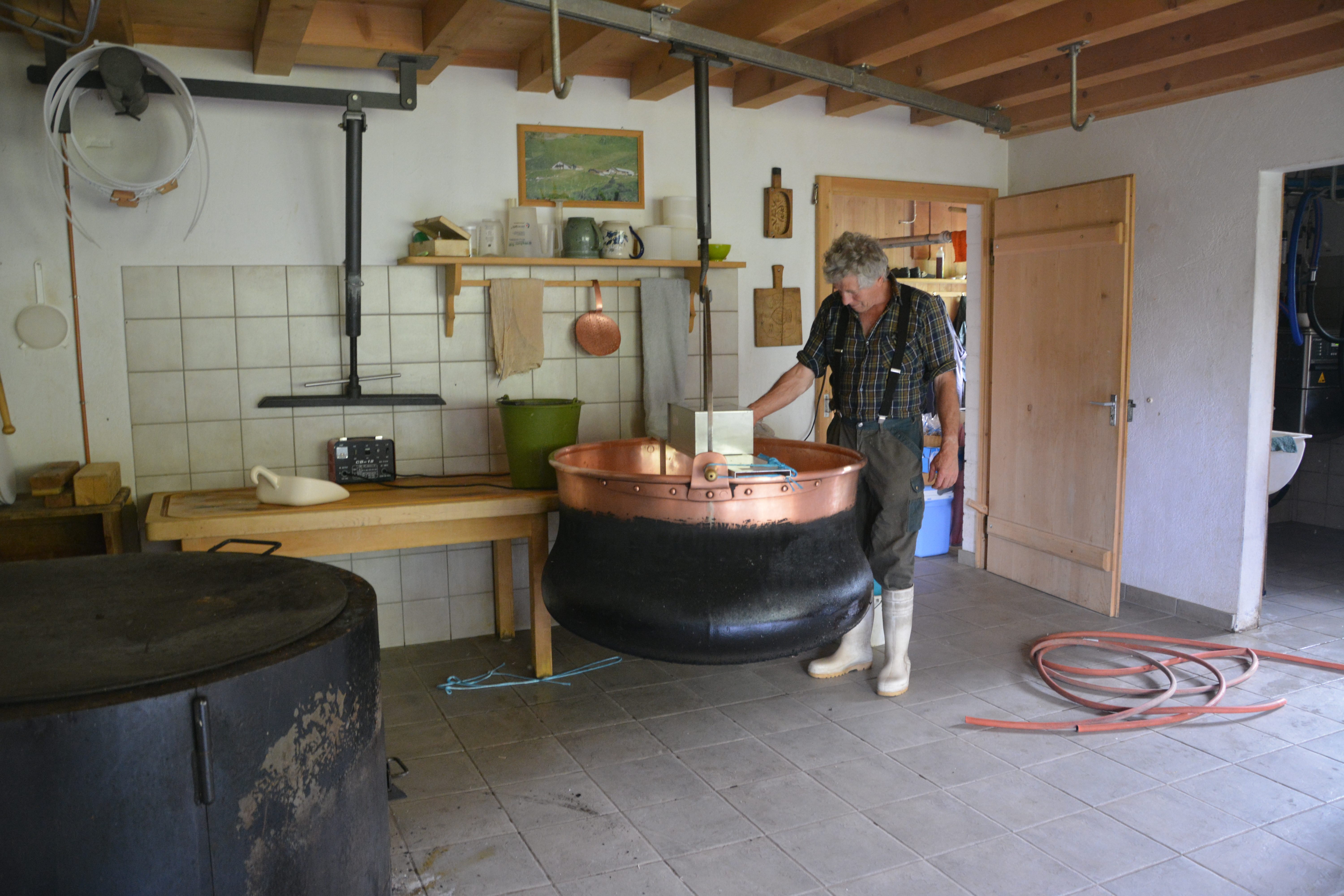
A humungous vat is the centrepiece of this large kitchen and dining area. Its beautiful, shiny-clean copper gleams. There are just a few implements around and the kitchen is quite stark—I expected cheesemaking to be much more crowded and complicated. On the walls of this beautiful pinewood “hut” hang a few carved serving spoons and 100-year-old carved butter moulds.
In the first few hours of the morning a lot happens on the farm. Leo has come to spend his summer holidays helping out on the farm and is a natural with the cows. I watch him milk them deftly, talk to them, and laugh as he gets an appreciative lick from one of the lady bovines.
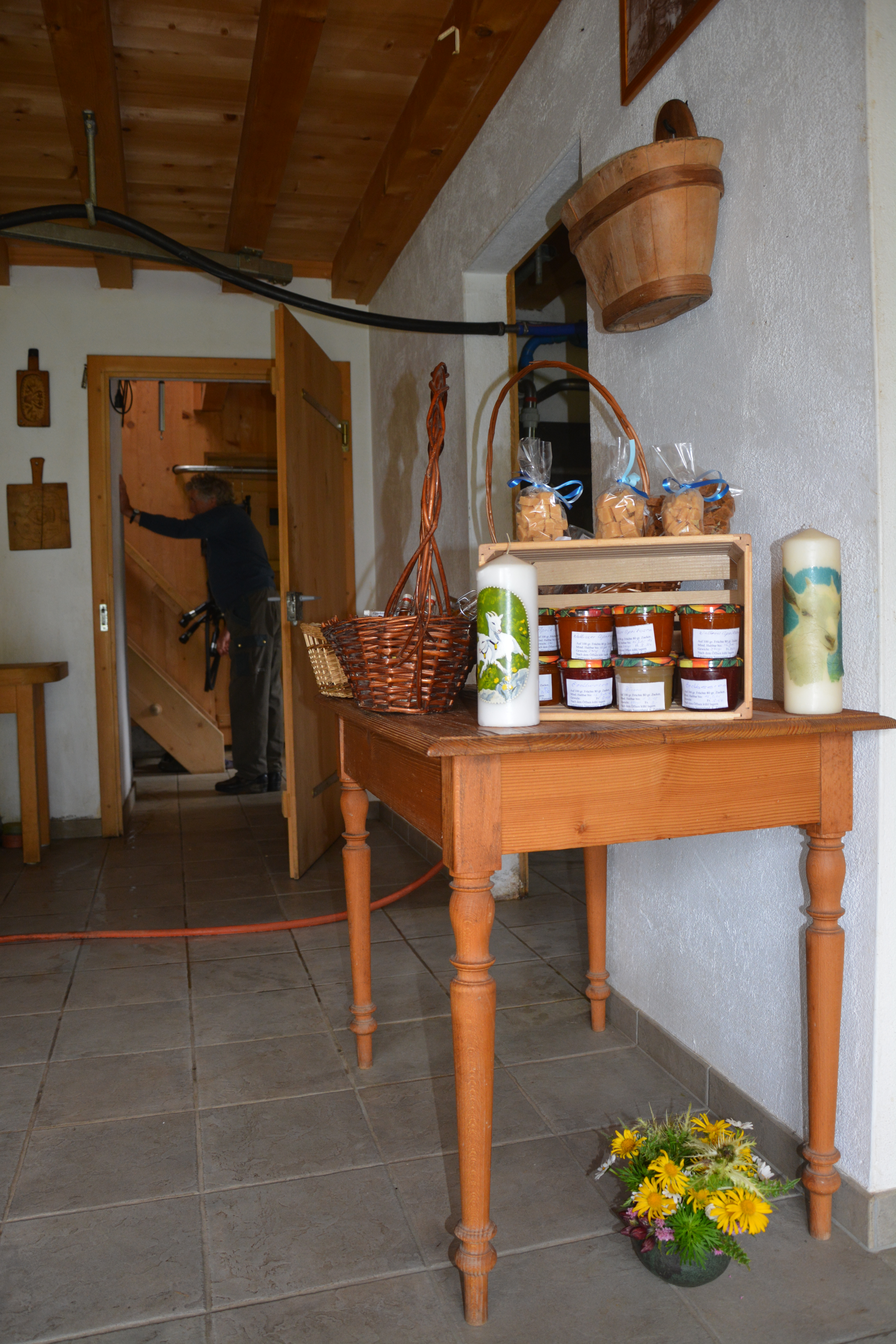
Erika has been out collecting bunches of wild arnica flowers that morning and proceeds to clean and create a herbal balm which she bottles and sells as a remedy for external injuries and bruises. Now she has a pot of cream on the boil to make a fudge-like treat called nidletäfeli. It’s very simple, she says: one kilo of double cream, one kilo of sugar, and a low flame with occasional stirring for one hour. Soon the nidletäfeli is ready and when I taste it, warm and sticky, it reminds me of my aunt’s Mysore pak.
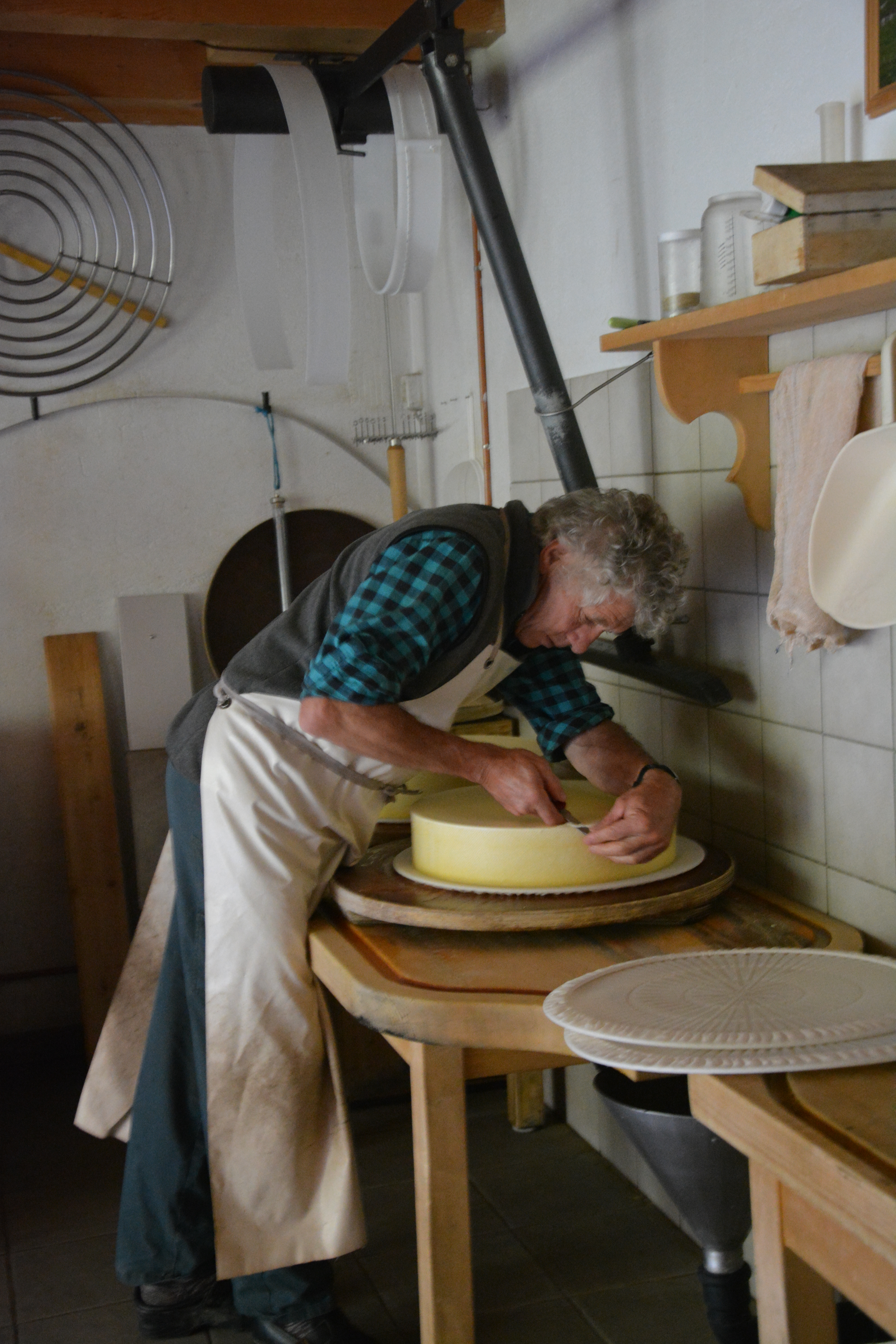
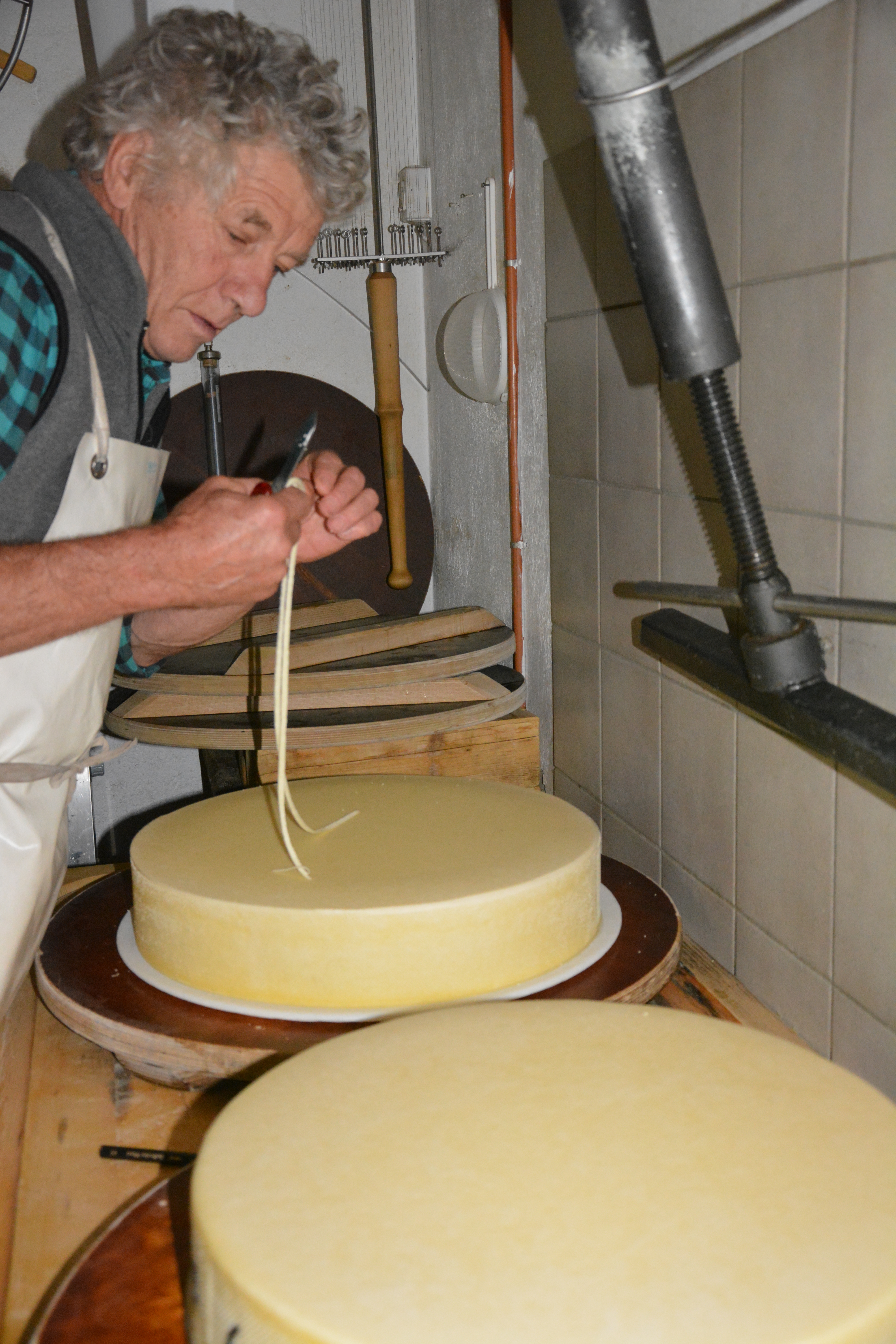
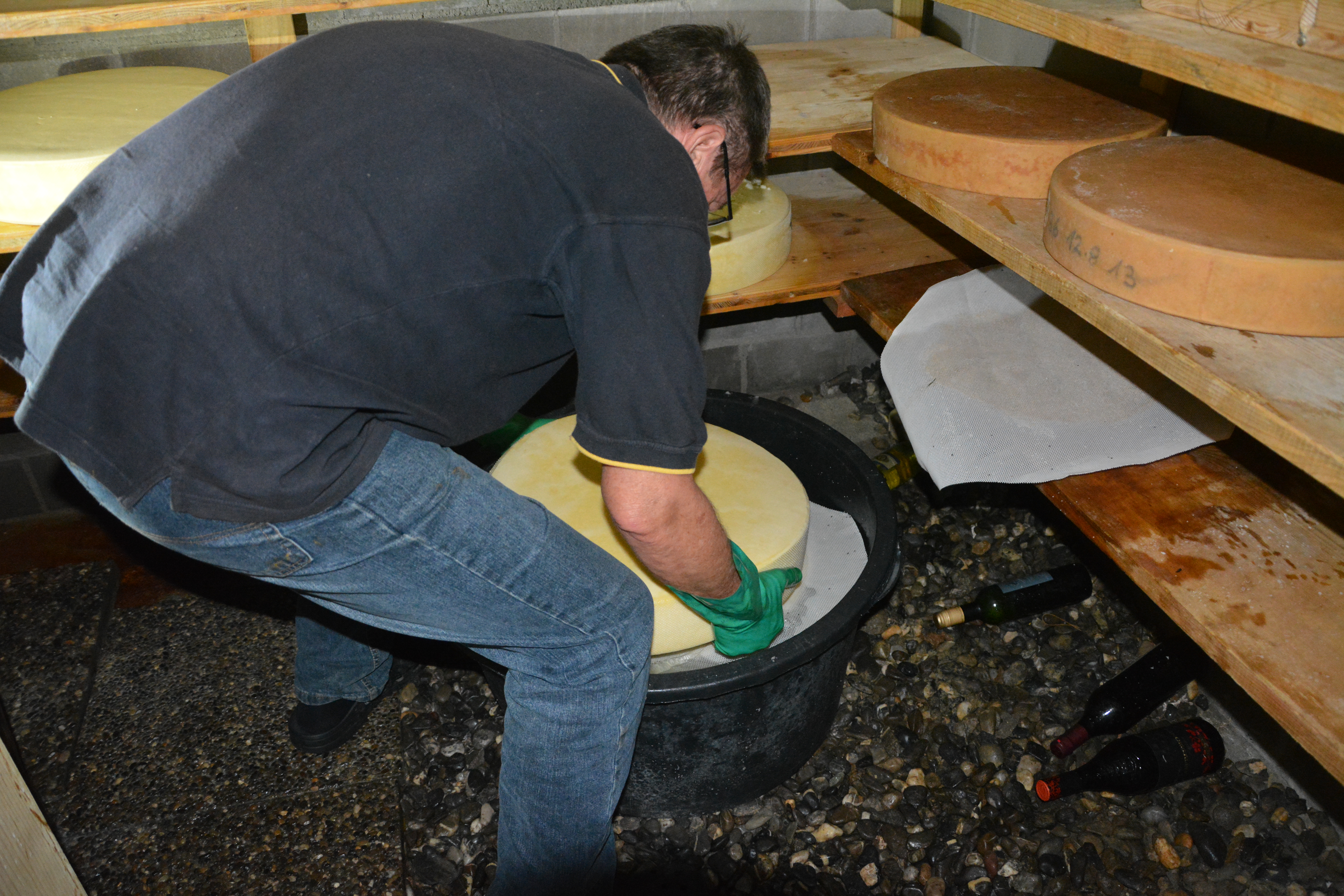
In the meantime she helps Jakob, Leo, and Hans Peter, the fourth person on this farm, and another gentle soul, herd all the cattle back into the barn to be milked for the second time in 24 hours. In one hour, the four milking machines have added 150 litres to the previous evening’s collection and a wood fire is lit underneath the cauldron. In half an hour the crispness of the mountain air disappears and the kitchen becomes incredibly warm and cosy. Serene and calming as this location is, it’s not an easy life here. It’s really hard work, Jakob tells me, not the actual making of the cheese, but keeping the cows, bringing them up the mountain for two months each year, taking care of them, cleaning the barn. “If you don’t have a passion for it you shouldn’t do it. Other jobs, like working in a bank, yes, it may be possible to do even if you don’t want to, but this one you can’t. I’m obviously not doing it for the money,” he says, pulling out a pocket Swiss knife. His expert hands trim the rims off the previous day’s cheese wheels, which have been sitting in the cheese presses overnight. He is like a sculptor at work. Hans Peter then moves the wheels to the bucket of brine in the storeroom. Brining gives the cheese its salty bite, probably the reason I find it addictive and can’t stop myself from constantly nibbling.
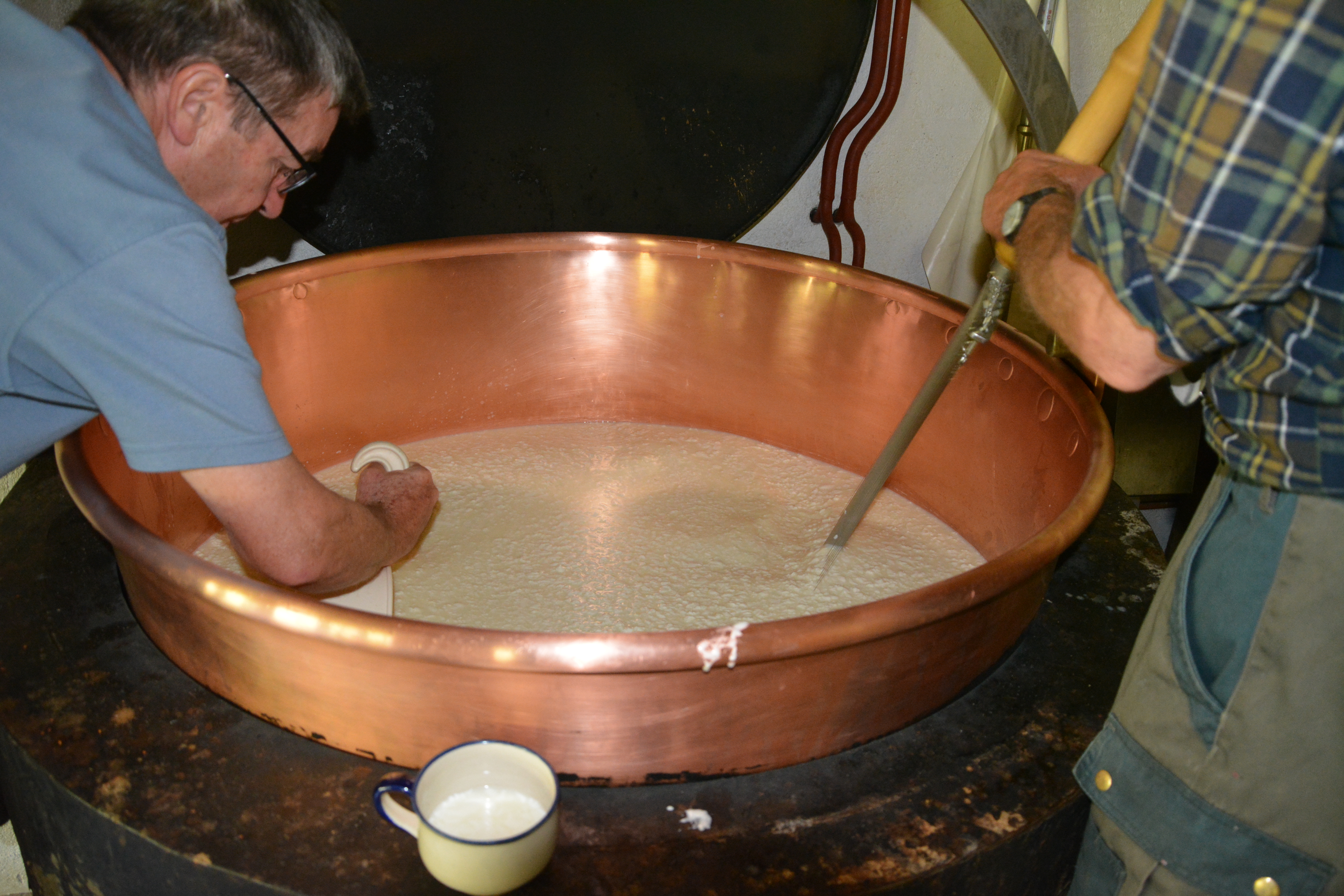
Before long the milk in the vat has curdled and Jakob and Hans Peter lift the steaming mass into the mould. Hot whey pours everywhere, and is directed into a large wooden tub outside the kitchen. If guests want to, they can soak in the tub. Erika says the whey bath is therapeutic and leaves the skin soft and nourished.
Some of the steam from the ebullient curds hits my face and I feel enveloped in this wonderful process. I’m mesmerised. In Jakob’s hands the whole operation seems so artistic, frictionless, and polished. I understand much more than I came here to learn. I get why he perseveres in the old ways and why the cheese needs to be made up here—how else will you capture the essence and flavour of the Alpine environment? I’ve never seen Alpkäse cheese sold anywhere abroad and realise why. Like their wines, the Swiss consume all of their best cheese produce locally and so there’s nothing left to export. As the cheese ages it shrinks a little and its weight decreases, which is why the older the cheese the more it costs. You also pay for the fact that the cheese farmer has cared for it for that long. The cheese is aged for anything from two months to three years and though it’s the same cheese it’s interesting how the taste varies. I buy several kilos of different ages to share with friends back home.
A week later, the first morning I’m back at the office, I bring in a large chunk to share with my colleagues. They all taste with interest as I explain what I experienced. Then I pop a piece into my mouth and remember the freshness of the Alpine air. I smell the cows in the barn, I hear the music of cowbells, I see lush mountain verdure. But more than anything else, in this nugget of Alpkäse, I taste the genteel grace of the man who made it.
A version of this story first appeared in the February 2015 edition of National Geographic Traveller India magazine.
 The Long And The Short Of It