I don’t like going to weddings. They require dressing up (which I hate) and often include travelling halfway across the city from my residence, usually at peak traffic time (which I also hate). But when it’s a Parsi wedding, I relent. The big attraction is the food (which I love, even though I hate myself the next day for overeating). If you can wangle an invitation to a Parsi wedding or navjote , the initiation ceremony, do attend. Remember to skip lunch that day. If you’re wondering what to take as a gift, the Parsi standard is an envelope with cash. The amount? At least enough to cover what the meal would cost the host. That may sound a bit indelicate, but among the Parsis this is par for the course.
The Parsi wedding dinner is legendary. Traditionally served on patras or banana leaves, the feast includes, at a minimum, three main courses—chicken, fish, and mutton in one form or another. The more elaborate feasts can also include eggs, prawns, paneer, and so on. To date, the only trace of vegetable I’ve ever seen served up on that patra is the carrot and raisin pickle, the lagan nu achaar.
The traditional wedding feast is fairly similar everywhere and has changed very little over the years. When you hear the voice over the microphone saying “jamva chalo ji” (please come and eat), head straight for the dining area and grab yourself a seat in the first or second sitting (paath). Long wooden tables are covered with a white tablecloth where guests must seat themselves. In front of them are laid two banana leaves, a glass, cutlery, and a napkin. Use the napkin to wipe your banana leaf clean, sip on one of the uniquely flavoured, fizzy drinks (ice-cream soda, raspberry, ginger-lemon etc.) and let the indulgence begin.
Once seated, the serving begins immediately. First comes the lagan nu achaar a sweet and spicy carrot and raisin pickle, followed by chapatis and sarya, fried sago crisps (don’t eat too many). Then come the other courses, meat, chicken, fish, rice with curry or dal, and dessert. You may first be served salli boti (tender mutton cooked in a onion-tomato gravy with potato matchsticks) or if you’re lucky, a yummy jardaloo gosh (mutton cooked with dried apricots). More often now it’s the chicken that comes first. Though there are many different kinds of chicken, the most famous is murgi na farcha, where large pieces of chicken are friend dipped in an egg batter with a lacy finish. Two Parsi fish dishes to die for are patra ni machchi and saas ni machchi. If you think you are done, wait for the course of rice: a mutton pulao (Parsi version of the mutton biryani) and dhansak dal (spiced mixed lentils and vegetables) or white rice with a coconut curry loaded with massive prawns. If you still have room there’s dessert. Lagan nu custar is the traditional Parsi pudding (a baked custard), rich with nuts and raisins, which you must try. But these days there’s often commercial ice-cream which of course you can give a miss.
Do you know any wedding feast where, while you are still eating your dessert, other guests line up behind you and wait eagerly for you to vacate your seat so that they can grab it and sit? Yes, that’s what happens at a Parsi wedding. Don’t be embarrassed to do the same, it is considered perfectly normal and appropriate behaviour.
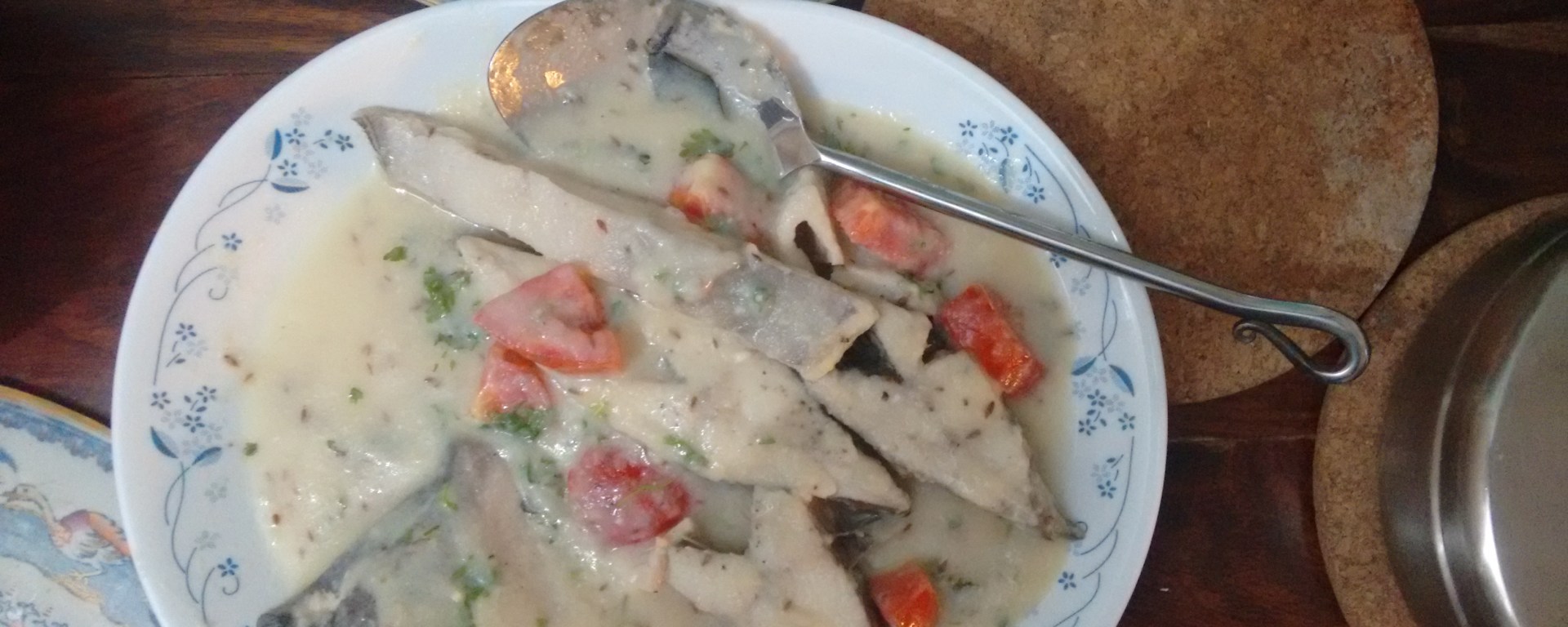
There is one dish on the Parsi wedding menu that is more or less non-negotiable. Those attending a Parsi wedding (or navjote) automatically assume, correctly so, that there will be fish and that it will be pomfret. The question, and topic of discussion, is only whether it will be patra ni machchi or saas ni machchi. I’ve yet to come upon any other variant. The former is pomfret smeared with a thick layer of coriander-garlic-mint chutney, wrapped in a banana leaf and steamed to perfection. The latter is pomfret cooked in a sweet-tangy sauce with just a hint of green chilli.
I’ve made the patra ni machchi a few times, but somehow until last year I’d never attempted to make saas ni machchi. “Saas” by the way has nothing to do with a mother-in-law, it’s just the Parsi-Gujarati corruption of the word “sauce”. And here is the recipe that has worked for me.
Ingredients
800g to 1 kilo pomfret sliced in 1-inch thick slices (you can use tilapia or snapper)
2 teaspoons salt
¼ teaspoon ground pepper
75g or ¾ cup chopped onion (red, yellow, even white is fine)
8 large garlic cloves (or about 20g)
5 green chillies (sliced down the middle; vary quantity based on kind of chillies you have and how spicy you want the dish)
a dozen curry leaves
1 teaspoon cumin seeds roasted and coarsely pounded
3 tablespoons rice flour
1 extra large egg (or 2 small)
¼ cup apple cider vinegar/ or a white vinegar
4 teaspoons sugar
2 medium plum tomatoes chopped into large pieces (optional but it is more authentic to put it in)
2 tablespoons chopped coriander
3 tablespoons oil (any mild vegetable oil)
1 litre water
Method
- Rub half the salt and ¼ teaspoon pepper on the fish and set aside.
- Heat 2-3 tablespoons of oil in a non-stick pan and lightly fry the chopped onion until it turns pink.
- Smash garlic cloves with your knife, add to onions, and fry on low heat 30 seconds.
- In a blender/food processor grind to a paste the fried onions, garlic, and 2 green chillies.
- Put the paste in the pan and fry on medium heat for about a minute, with the coarsely ground cumin.
- In the same blender whisk together rice flour and 3-4 cups water.
- Add rice-water mix to onion mixture and on medium heat let it come to a boil, stirring occasionally and keeping covered when not stirring. About 10 minutes total.
- Meanwhile in another bowl, whisk together the egg, vinegar, and sugar.
- Slowly add hot curry to egg mixture no more than one serving spoon at a time, and whisk after each addition. Once you’ve added half the sauce to the egg mixture, tip the egg mixture into the pan and cook on a low flame, whisking continuously. (This is to ensure the egg doesn’t scramble when it comes in contact with the hot liquid).
- Fry the curry leaves for a few seconds and the rest of the chillies and add to the sauce.
- Cover and let the flavours meld on a low flame for about 3 minutes. Add more water according to how thick/thin you want the sauce, which would have thickened as much as its going to by now. Add salt to taste.
- Now slide the pieces of fish into the sauce and cover. After 4-5 minutes gently turn the pieces of fish over and cook an additional 2-3 minutes covered. Pomfret usually takes about 6-7 minutes to cook and will continue to cook in the hot sauce even after you turn off the flame.
- Take the dish off the heat.
- Just before serving add chopped tomatoes and chopped coriander to the hot sauce. (the tomatoes don’t need to cook or soften – they should stay firm-ish, that’s why you add them in the end).
- Eat with steamed rice or a mild pilaf or with chapatis/naan/pita. ♦
 The Long And The Short Of It
Yum! I have never blended the masala, can’t wait to try it.
LikeLike